As I walk into LA Sushi Co., an unassuming spot on a busy Brentwood boulevard, my mind naturally turns to sushi… in Los Angeles. This may be America’s premier region for Japanese dining, but the real heroes of the city’s sushi scene aren’t the temples of omakase or the celebrity chefs. They’re the affordable neighborhood joints that quietly dot every part of the region.


From strip malls in the Valley to the South Bay, Hollywood and the desert fringes, you can walk into the most forgettable-looking plaza imaginable and walk out having devoured a delicious, reasonably priced sushi meal. These places are essential to LA’s food culture — and lately, they’ve been struggling.
The pandemic pushed countless sushi chefs into early retirement. Those who remained have been squeezed by higher ingredient costs, rising wages, and ever-increasing rents. With that tricky context: can automation help these neighborhood institutions survive, and even thrive, for decades to come?
Inside LA Sushi Co., the vibe is contemporary but warm: bright blue tile, a handful of tables, and a generous display of fish behind the counter. That’s where I spot the machines I’m here to see — Autec’s maki and nigiri “sushi robots.”
The term “sushi robot” might conjure images of a blade-wielding automaton expertly slicing tuna, but these machines do something far more modest. They prepare rice.
Sushi rice is deceptively complex. It has to be seasoned with the right balance of sugar and vinegar, shaped consistently, and served at just the right temperature. It’s foundational to good sushi — and, as the chef working the bar explains, it’s also the least interesting part of an itamae’s job. The work is repetitive, physically demanding, and largely invisible to customers, even though it’s essential to every piece that leaves the counter.
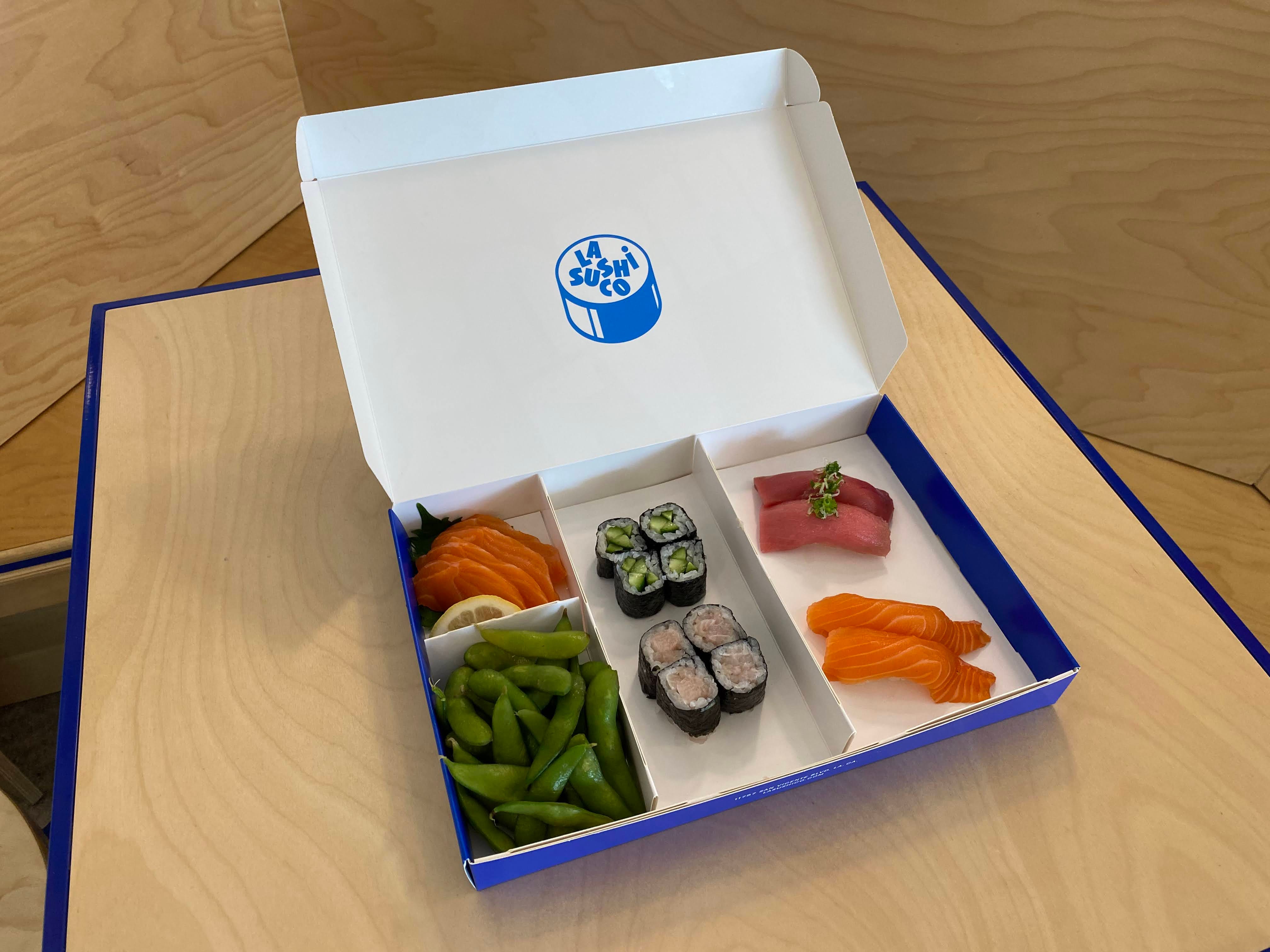
I order a few rolls and nigiri, neatly presented in a Sugarfish-style box. The verdict: impressive. The rice is spot-on, the fish — still very much prepared by human hands — is excellent. This eight-piece box costs $21, which is borderline miraculous for this part of town. Walk 100 feet down the block to Katsuya, and you’ll pay more than that for just an order of rainbow rolls.
For Nate Hahn, the restaurant’s co-owner, the machines are central to making the economics work. He estimates they reduce labor costs by roughly 50%, while also speeding up throughput — critical for a business built around the lunch rush, both in-store and via delivery.
The efficiency gains matter even more at scale. LA Sushi Co. also operates locations inside several Southern California sports stadiums. Producing $80,000 worth of sushi during a halftime window, Hahn notes, simply wouldn’t be possible without this kind of automation.
Autec’s technology isn’t new. The company began developing sushi robots in the 1980s as a side project within Japanese audio giant Audio-Technica. What’s changed is adoption: in recent years, these machines have quietly proliferated. There are now an estimated 200 to 300 in Southern California alone.
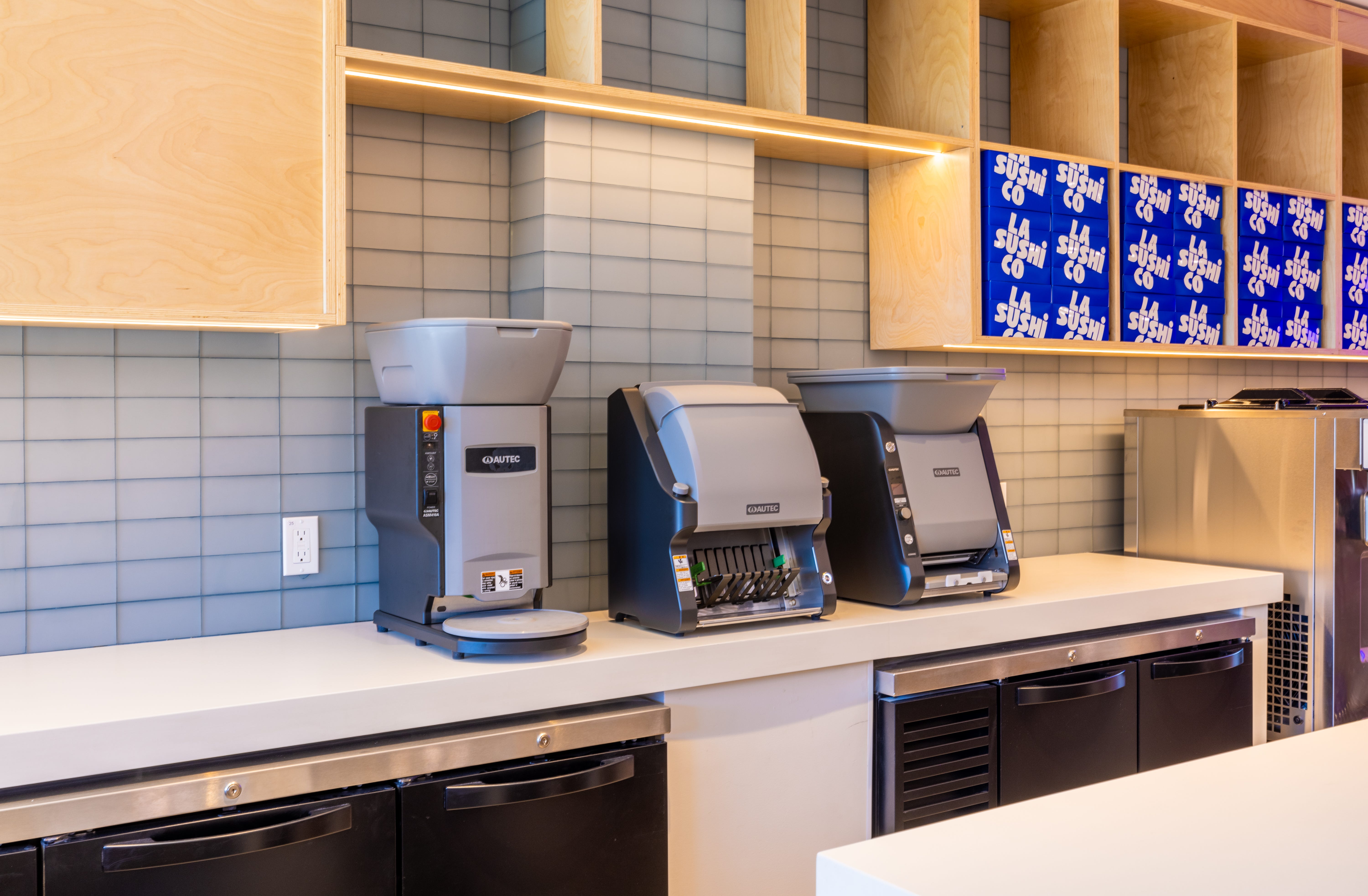
That spread reflects a broader truth about automation in food service. The most successful applications aren’t about replacing humans with flashy androids — they’re removing the most repetitive, least rewarding tasks so that workers can focus on craft, quality, and customer experience.
If keeping affordable sushi lunches on the menu in Los Angeles requires machines that make better rice, more consistently, and at a lower cost, that feels less like a dystopian future and more like a pragmatic compromise. In a city where everything else keeps getting more expensive, this may be automation at its best: quiet, boring, and in service of something deeply human.