

Drone delivery is finally taking off. After a decade of pilots, hype cycles, and regulatory stasis, the FAA is making new rules, and a few companies are starting to look less like experiments and more like potential infrastructure. One of the pioneers in the space is Matternet, which has raised a relatively lean $80 million, partnered with UPS, and became the first company with an FAA type-certified drone delivery system, initially focused on healthcare before expanding into food and retail.
At the center is founder and CEO Andreas Raptopoulos, who’s been building toward this moment since 2011, back when drones were still synonymous with military uses or hobbyist tinkering. In the conversation below, we unpack Matternet’s evolution from humanitarian logistics to urban delivery platform, why he rejects the hub-and-spoke model, how the unit economics work, and what it might take for drones to move from novelty to everyday utility.
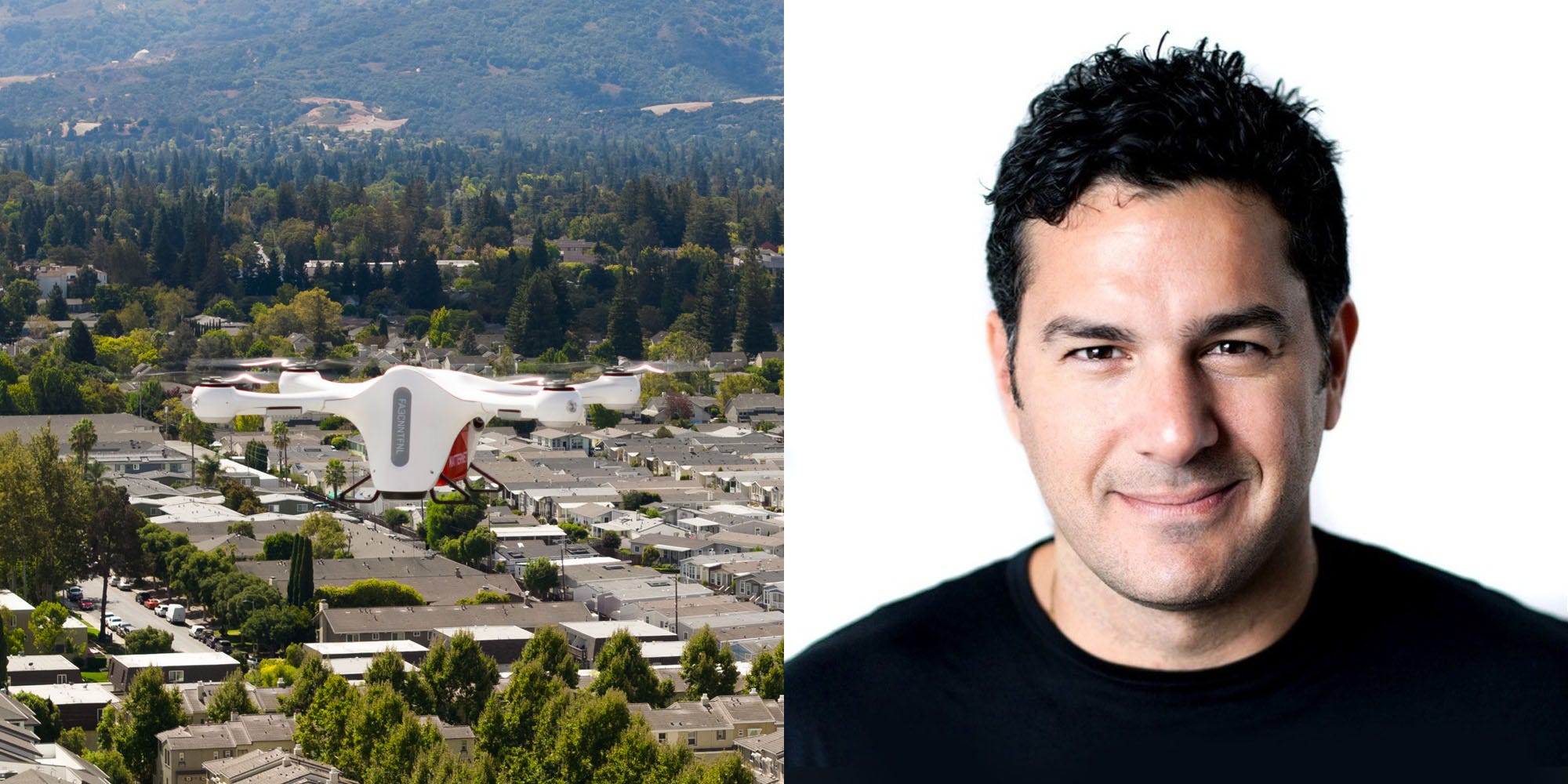
Jonah Bliss: Let’s start at a high level, what’s the Matternet story?
Andreas Raptopoulos: In 2010, I came across what was happening in the DIY drone space. I came into the space with a question, “has something changed in the technology landscape that would allow us to build a different kind of flying vehicle?”
As I started thinking through what was happening, I realized there was a DIY drone movement building up. People were taking sensors popularized through smartphones, computers, GPS units, and creating these tiny quadcopters that could aviate and navigate by themselves.
When I saw that, I thought: this is going to change how the world does transportation—for goods and eventually for people.
That led me to start Matternet in 2011. We were among the first companies to talk about drones as a civilian tool. Back then, drones were mostly associated with the military.
We started by asking: where could this have immediate impact? These systems weren’t permitted in the U.S. or Europe yet—but there were places in the world with no transportation infrastructure at all. So we focused on those.
We did projects in Haiti and the Dominican Republic in 2012, then Bhutan and Papua New Guinea in 2014, and later Malawi. We worked with organizations like Doctors Without Borders, the World Health Organization, and UNICEF.
The idea was leapfrogging: in places without roads, could you skip straight to aerial transport—like how cellular skipped landlines?
For the first few years, up until 2014, we focused entirely on humanitarian work. I gave a talk in 2013—“If there are no roads, there’s a drone for that”—and that really became how people understood what we were doing.
But eventually, I realized humanitarian funding wouldn’t be enough. It was clear we’d need something like $100M+ to build the full technology stack. So we pivoted to commercial use cases.
We entered Switzerland in 2015 and started working with regulators and Swiss Post to figure out how to safely operate drones over cities.
We knew that about 80% of last-mile delivery happens in urban and suburban areas. And something like 85–86% of Amazon shipments are under 2 kg.
So the question became: how do we build a system that regulators and the public trust in those environments?
In 2017, we became the first company approved to fly over cities in Switzerland. We focused first on healthcare—transporting diagnostics, lab samples, and medicines between facilities.
If you look at a system like UCSF, there are dozens of locations moving samples and materials all day. If you can reduce that to 5–10 minutes, it changes efficiency and patient outcomes significantly.
We’ve always been told BVLOS is just around the corner…
Yeah, exactly. And now it finally is here.
We partnered with UPS in 2019 and launched the first commercial drone delivery service in the U.S. A lot of people were doing pilots at the time—but this was a real operation.
Our philosophy is different from most. We don’t want to be UPS—we want to be Apple or Tesla. We want to build the machines and systems that others operate.
So with UPS, we provided the full stack: the drones, the ground infrastructure, and the software. They operated the system.
Then COVID hit, and BVLOS timelines slipped.
But in 2022, we became the first—and still the only—company with a drone delivery system type-certified by the FAA. That process took four and a half years.
About 14 months ago, we launched our first home delivery product. Up until then, we were only doing B2B healthcare. Now we’re expanding into food and retail.
Can you talk a bit about the unit economics, especially outside of healthcare?
In healthcare, we already have positive unit economics. Customers are willing to pay $20+ per delivery, depending on the market.
For food delivery, the target is different. We believe we can get costs well below $5 per delivery, while customers are willing to pay $6–$8.
To get there, a few things matter:
You need volume—around 100 deliveries per day per location
You can’t have people on-site operating drones
You need low-cost, high-utilization aircraft
Think of it in terms of cost per flight hour. If an aircraft costs $20,000 and runs for 10,000 hours, that’s $2 per hour. If you can do 5–8 deliveries per hour, you’re looking at around $0.40 per delivery just for the aircraft.
Then you layer in batteries, real estate, supervision, and maintenance.
What does supervision look like?
