

August put physical AI in two places at once: at the center of a capital boom and on the receiving end of a reality check. Investors poured $900 million into XPeng’s humanoid unit, $250 million into Neros, $200 million apiece into Gravis Robotics and Gatik, and tens of millions more into drone, defense and industrial automation startups. Crunchbase now counts $47.4 billion invested in physical AI during the first half of 2026—more than the sector raised during 2022, 2023 and 2024 combined.
But deployments refuse to follow a straight line. Serve slashed its forecast as Uber Eats volume fell. London’s robotaxi rollout stalled just weeks after Uber and Wayve celebrated new licenses. Caterpillar sued an aftermarket autonomy startup, and a U.S. government lab began examining whether Chinese lidar presents a security threat. Capital wants to says that physical AI is inevitable; operations, regulators and commercial partnerships say it will still be slow and complicated.
Across the network, we also went deep on why cities may actually want to let robotaxis linger at the curb. And on October 14, we’re bringing the conversation to Texas with the Urban Autonomy Summit in Austin, presented by Nexar. Request an invite to join leaders from across AVs, freight, policy and city transportation.
PARTNER | Premium Rides Are Boosting Uber and Lyft. For How Long?

Premium rides have climbed to 20.1% of observed Uber trips and 8.8% of Lyft’s, up more than 40% on both platforms in two years. That shift is helping the platforms charge more and improve margins, but record driver pay could put those gains under pressure if consumers are less willing to pay more for rides.
Premium ride share grew 43.5% on Uber and 44.9% on Lyft over the past two years, reaching 20.1% and 8.8% of observed trips.
Median ride prices rose 10.3% on Uber and 7.1% on Lyft year over year.
Platform fees grew even faster, rising 14.0% on Uber and 26.4% on Lyft.
Driver gross pay per trip reached $15.78, up 7.6% year over year and surpassing its 2021 peak for the first time. Bonus pay rose 18.2%, while non-trip incentives jumped 56.2%.
Get the full data, including pricing, fees, premium mix, and driver pay across Uber and Lyft. Download it free → https://gridwise.io/analytics/inside-the-q2-2026-rideshare-economy
Delivery Robotics, Drones & AVs
Serve Robotics’ second quarter delivered both growth and a rather large warning light. Revenue reached $3.2 million, up 404% year over year, but the company lost $64.1 million and cut its full-year revenue forecast to $9–10 million after Uber Eats sent it fewer orders. Serve said it is unlikely to renew the partnership beyond early 2027 without a change in the operating model.
Then came the delivery dramaaaa: Uber sold its entire Serve stake, apparently surprising the company it once incubated inside of Postmates. The dispute centers on order volume, reliability and acceptance rates: Uber worried about Serve’s performance in new markets, while Serve argued Uber’s displayed arrival times left its robots insufficient time to complete trips. More broadly, it was a reminder that Uber controls the demand and customer relationship—even when someone else owns the robot. Serve quickly showed it had other dance partners, launching with Grubhub and Wonder in Chicago, Los Angeles and Alexandria. It also expanded DoorDash deployments to Washington, D.C. and San Jose, opened its first Miami microdepots, introduced an arrival-alert device called Beacon and unveiled Moxi 2.0, a hospital robot with substantially more onboard compute and perception speed. Nothing gets you over a breakup like an extremely busy press release.
Uber made another big autonomy bet by investing in Zipline and adding its drones to Uber Eats. The first deliveries are expected in existing Zipline markets by the end of 2026, with the companies targeting dozens of U.S. cities and one million drone deliveries per day by the end of 2029. Uber increasingly looks less like a delivery fleet and more like the routing layer for couriers, sidewalk robots, AVs and aircraft alike.

Amazon wants Prime Air to reach nearly 500 U.S. cities and towns by year-end, a sixfold expansion from its current footprint of 11 sites across 10 metro areas. Each location can cover roughly 175 square miles, carrying packages of up to five pounds in as little as 30 minutes. Amazon says more than 60% of frequently purchased items already fit within the system’s size and weight limits.
Waymo won California approval to expand its commercial territory across 18 counties, more than tripling its permitted footprint around Los Angeles and the Bay Area while clearing the way for service in Sacramento and San Diego. The approval also covers Waymo’s lower-cost Ojai vehicle under an operational domain that permits all times, speeds and weather conditions.
Just after month-end, Waymo began welcoming public riders in Denver, San Diego and Tampa, bringing fully autonomous passenger service to 14 cities. Denver and San Diego are receiving the weather-ready Ojai minivan, while Tampa begins with Jaguar I-Paces. Access is initially rolling out to people on the waitlist rather than opening to everyone at once.
Uber and Wayve secured private-hire licenses for 15 supervised robotaxis in London, completing the city’s driver, vehicle and operator licensing requirements. More than 100,000 Londoners reportedly joined the interest list. Yet by month-end, the wider driverless rollout looked unlikely to begin in 2026, as TfL had not issued operator guidance and no company had applied for the new national automated passenger service permit. London’s robotaxi summer lasted approximately three weeks.
Nevada approved autonomous transportation-network applications for Tesla, Waymo and Uber affiliate Aviari. The permits allow up to 5,000 Tesla vehicles and 1,000 each from Waymo and Aviari in Clark County during their first year. Those figures are regulatory ceilings, not deployment commitments, and airport pickups still require separate authorization.
Tesla prepared to introduce its purpose-built Cybercab in Austin, initially for employee rides before joining the public network. The two-seat vehicle has no steering wheel or pedals, but Tesla acknowledged it must collect Cybercab-specific driving data before deploying at scale. That caution matters because Tesla’s existing unsupervised fleet remains small compared with Waymo’s operation.
Gatik raised a $200 million Series D led by the Qatar Investment Authority and Koch Disruptive Technologies. The middle-mile trucking company reports more than $600 million in contracted revenue, 85,000 completed driverless orders and 99% on-time delivery across retail, grocery and CPG routes.
Bot Auto committed to using exclusively U.S.-based remote assistants. The workers do not drive its autonomous trucks, but can communicate with police, share cargo and route information, activate hazard lights and initiate a shutdown at an officer’s request. The company framed domestic staffing as both an emergency-response measure and a supply-chain resilience commitment.
Humanoids & Physical AI
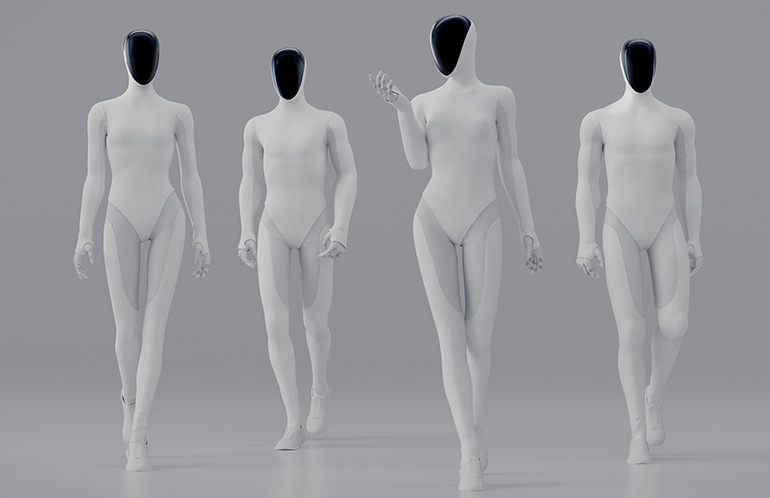
XPeng’s humanoid unit, Dogotix, raised more than $900 million at a post-money valuation above $6.3 billion. IDG Capital led the round, with Gaorong, Tencent and Alibaba participating. XPeng described it as the largest single private financing in China’s embodied-AI sector and plans to use the capital for R&D and mass production.
Who let the dogs out? Defense autonomy attracted two more giant checks. Neros raised $250 million at a $2.5 billion valuation to scale autonomous strike drones, counter-UAS interceptors and multi-drone control, with a goal of producing one million aircraft annually by 2028. Terra Industries separately closed a $52 million seed round to expand its African manufacturing base and defense systems, including a 34,000-square-foot drone factory opening in Ghana.
Spanish drone company FuVeX raised €3 million to expand long-range inspection of electrical networks and pursue dual-use defense applications. The oversubscribed round included Sodena, SEGO Venture and Izertis Ventures, while the company also received a €400,000 public R&D grant.
FORT Robotics agreed to go public through a SPAC merger with Newbury Street II Acquisition Corp. The deal gives the industrial safety and security company a $556.6 million pro forma enterprise value and includes approximately $31 million in committed financing. If completed, FORT will trade under the ticker FROB. Will this round of spac-a-palooza end any differently than the last one?
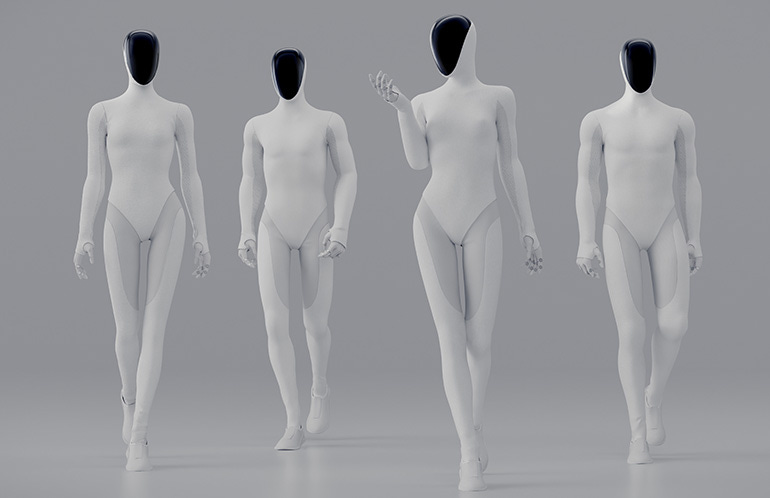
Brussels-based Motion raised a $2 million pre-seed for its Humanoids-as-a-Service model. Rather than asking factories to choose and purchase a robot, Motion bundles hardware selection, training, integration, insurance, compliance and maintenance into one monthly fee. Five Belgian pilots are already training robots to pack containers, load crates and place components on conveyors.
Korean materials company Unichem agreed to acquire Brooklyn-based Loomia for up to $6.3 million. Loomia embeds flexible circuits in textiles and other soft surfaces, allowing them to sense pressure, temperature and slippage. Unichem hopes to turn that technology into electronic skin for humanoid hands, grippers and outer shells, with its first engineering sample targeted for January 2027.
Fulfillment & Back of House Automation
Amazon is reportedly exploring “Project Tetromino,” a plan for highly automated last-mile delivery stations. Internal documents described a possible $103 million pilot beginning in 2028, followed by a broader rollout of facilities using AI and robotics to boost throughput.
Construction, Farm & Sourcing Automation
Caterpillar sued Blue Light Machines for allegedly infringing five patents with its aftermarket autonomy kits. Caterpillar wants sales halted and is seeking triple damages; Blue Light says its system combines long-established open-source drone software with agricultural steering hardware. The startup reports roughly 200 active subscriptions for kits that can automate compactors and articulated dump trucks for $50,000–$60,000. David versus Goliath, except both are operating heavy machinery.
Gravis Robotics raised a $200 million Series A from SoftBank at a reported $1 billion valuation. The ETH Zurich spinout retrofits excavators and other heavy equipment with hardware and software that can assist an operator or run the machine autonomously. The company called it the largest Series A yet for a construction robotics startup.
Kiosks, Retail & Self-Checkout
Murphy USA introduced an autonomous “robotic restaurant in a box” from Automated Retail Technologies at select larger-format stores. White Castle is the launch brand, with customers ordering on a touchscreen and receiving hot food in about two minutes. Murphy gets a foodservice offer without building a kitchen or staffing a restaurant; customers get sliders at a gas station. America remains undefeated.
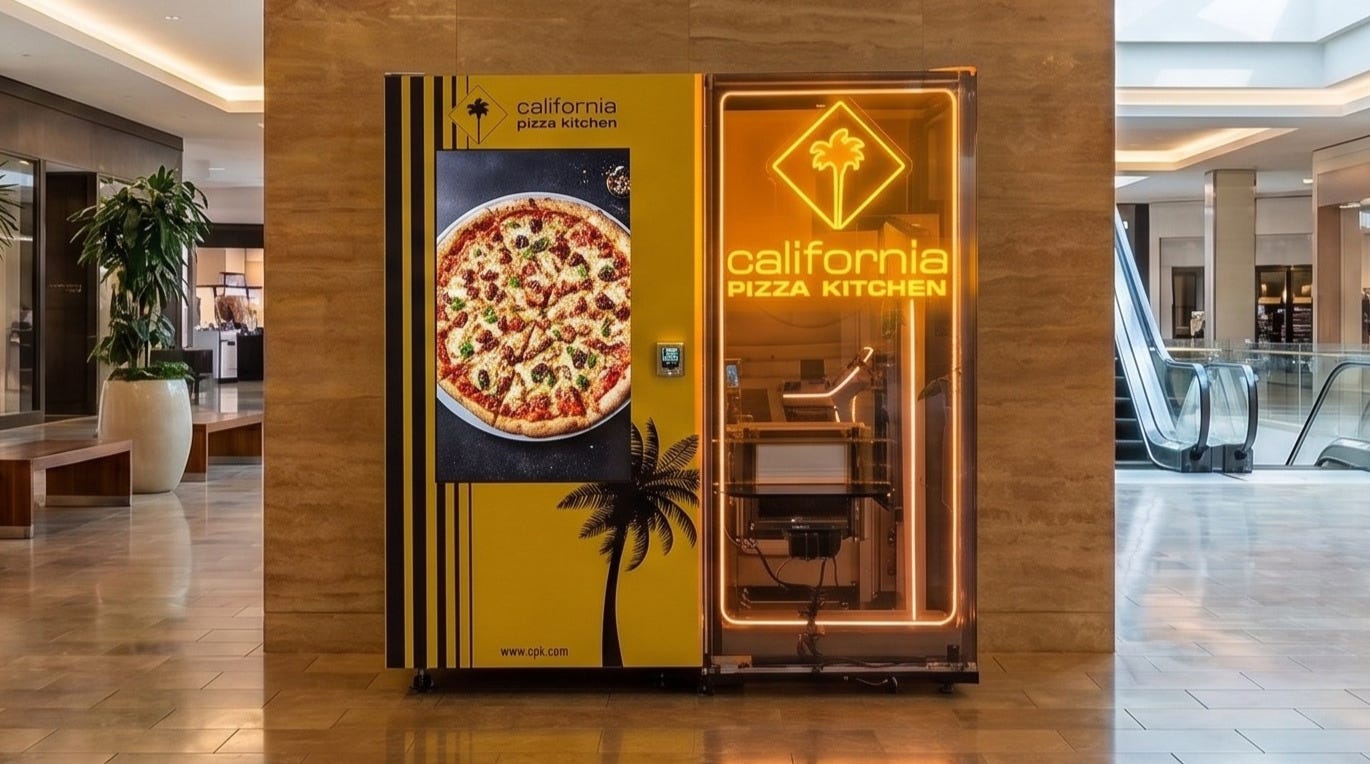
California Pizza Kitchen and T-ROC Global plan to deploy up to 1,000 automated food machines across 30 U.S. markets over three years. The units can produce a hot pizza in roughly 90 seconds and will also offer pasta, mac and cheese and Butter Cake. Airports, universities, hospitals, hotels, offices, residential buildings and EV charging stations are among the target locations.

Industry Trends
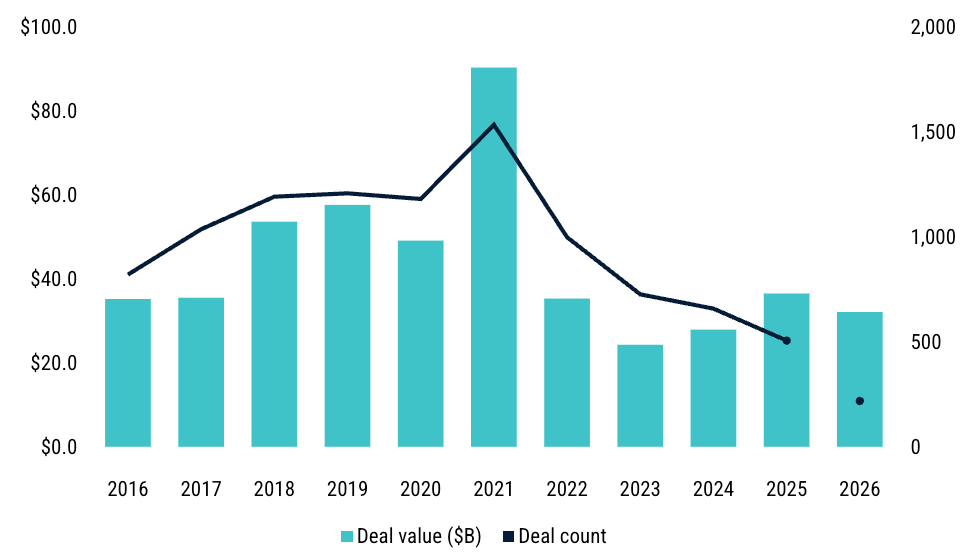
Physical-AI funding reached a record $47.4 billion across 521 deals during the first half of 2026, according to Crunchbase—nearly four times the prior half-year and more than the sector raised during 2022 through 2024 combined. The boom is highly concentrated: Waymo’s $16 billion round represented roughly one-third of the total, followed by multibillion-dollar financings for Anduril, Shield AI and Saronic.
PitchBook similarly found that mobility-tech deal value surged in the first half, even as deal count declined. It put total investment at roughly $32.1 billion, with autonomy accounting for $20.8 billion—or nearly two-thirds of the category.
Europe’s sovereign-AI push is increasingly being financed like infrastructure. Italian AI company Domyn reportedly accumulated about $1.1 billion in funding, roughly 90% of it debt, to build its Colosseum supercomputer in southern Italy. UK startup Callosum, meanwhile, raised a $100 million seed round that included the first investment from the UK Sovereign AI Fund. One is building the compute; the other wants to route AI workloads across different chips more efficiently.
New curbside research suggests cities should sometimes let robotaxis park instead of forcing them to circulate. In a simulation of 1,700 AVs handling 68,000 daily San Francisco trips, banning curb staging increased fleet travel by roughly 60%. The researchers also estimated that staged robotaxis use curb space about eight times more productively than privately parked cars. The empty car at the curb may be annoying; the empty car circling the block is worse.
A Department of Energy laboratory is reportedly testing Chinese lidar sensors for cybersecurity vulnerabilities. The Idaho National Laboratory review comes as lawmakers consider restrictions on Chinese suppliers including Hesai and RoboSense. Potential concerns include remote disruption, data exfiltration and supply-chain dependence, although no specific exploit or evidence of spying has been publicly identified.

In Other News
Hugging Face’s $399 Microduck sells out in a jiffy. Do you really need a cocktail robot? China’s World Humanoid Robot Games doesn’t exactly make the industry look safe for normies. Deere quarterly income hits $1.38 billion. Manna CEO talks Tulsa expansion. India’s Airbound raises $37M for aerial logistics. Serve Robotics partners with Little Caesars, while Coco and Uber extend partnership to Helsinki. Waymo published its 10 AI insights, while Zoox releases its Safety Case Framework.