

Wonder, the “vertically integrated food technology platform,” helmed by ecommerce wunderkind Marc Lore, just pulled in a fresh $650 million in funding, as part of a massive Series D that values the company at nearly $10 billion. Wonder’s been expanding quickly, leapfrogging from 46 to 140 locations over the past 14 months.
The next phase of the company’s growth rests on two things: a rapid expansion across Texas, and the full-scale embrace of delivery automation. PJ Poykayil, Wonder’s Head of Customer Delivery Operations, is the man leading that charge. I caught up with him — two and a half years after our last big interview — to talk about globe-spanning logistics, the company’s new partnership with drone deliverer Zipline, and even what he makes of Grubhub’s long-time robotics partner Starship exiting the college market.
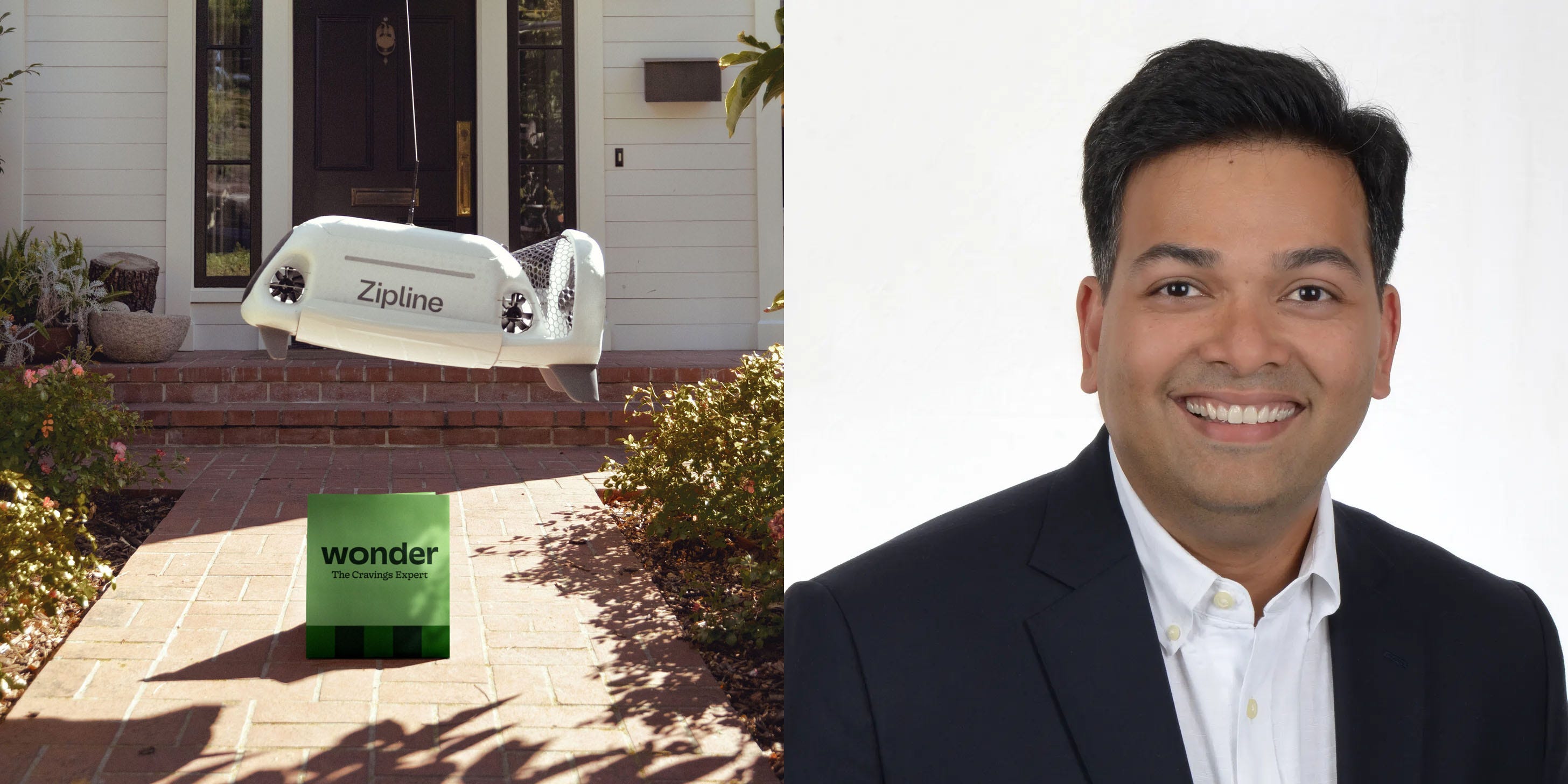
Jonah Bliss: Wonder and Grubhub have been working with autonomous delivery devices - robots and drones alike - for some time now. What makes this Zipline partnership different?
PJ Poykayil: Autonomous delivery, and drone delivery in particular, plays a key role in Wonder’s strategy to make great food more accessible. This technology helps us increase the speed of deliveries and reach areas that traditional delivery methods don’t always serve well.
Zipline is the world’s largest autonomous delivery service, and partnering with an industry leader like that represents a major step forward in our commitment to bringing innovative dining experiences to customers at scale.
To put the scope of Zipline’s operations into perspective, to-date:
They’ve completed more than 2.5 million autonomous deliveries worldwide. That’s not just across food, but other major sectors like healthcare and retail.
In the U.S., Zipline currently offers more than 100,000 items available for order today. That’s real scale.
Zipline also has a strong track record of operating in Texas in particular, making them a natural choice for Wonder to collaborate with as part of our upcoming expansion.
This sounds very much like a Texas story: Wonder is actively working on its Dallas-area expansion, while Zipline has made DFW its major market. Will Wonder’s new storefronts be specifically designed around drone deliveries?
This is definitely a Texas story — Texas has long been part of Wonder’s growth roadmap, given the strong alignment between the state’s market dynamics and Wonder’s delivery-first, suburban-friendly model.
As we look ahead to our initial expansion in the Dallas-FW area, we’re starting to build the infrastructure needed to support long-term growth across the state, including storefronts, kitchen operations, advanced logistics, and ordering technology.
All of those investments will also help create the foundation for Wonder’s scalable drone delivery network, and on top of that, Texas has emerged as one of the U.S.’ leading states when it comes to commercial drone operations.
From expansive geography to fast-growing metropolitan areas to a consumer population that traditionally embraces innovation, we’re confident that Texas is an ideal market to build the kind of drone ecosystem that we can grow quickly.
Wonder and Zipline use a multi-step process to identify locations that are well-suited for drone delivery. As part of that, we’re evaluating all of the relevant operational considerations, from landlord approvals and installation requirements, as well as market factors including population density and anticipated order volume.
Partner | Delivery Insurance Costs Diverge

Insurance costs are eating into delivery and ridehail profitability, but not all markets are created equal. A key regulatory reform is getting delivery costs, in select regions, back on track. Dive deep into the industry trends that can make or break your bottom line with Gridwise Analytics’ 2026 Insurance Fees Report.
You previously announced a drone partnership with Dexa. What did you learn from that pilot, and what’s different about this new project?
The New Jersey pilot provided valuable insights across delivery speed, restaurant handoff, and the overall customer experience.
We also saw an extremely encouraging response from consumers:
Roughly 50–60% of eligible customers opted into drone delivery;
80% rated their experience a 4 or 5 out of 5;
And 90% said they would choose drone delivery again.
Customers consistently highlighted the speed, reliability, and ease of the experience, with many describing it as a fun and engaging way to receive their meals.
Importantly, the pilot demonstrated that drone delivery can meaningfully reduce delivery times, particularly at longer distances.
These learnings—combined with key operational insights and site requirements—have directly informed our approach in Texas and give us confidence as we scale the partnership.
Grubhub’s partner Starship recently announced it is leaving the college campus market. How will your robotic operations at universities change for 2027?
