

Robotics’ newest battleground isn’t autonomy or dexterity — it’s market access. The FCC added foreign-produced advanced robots to its national security Covered List, blocking new equipment authorizations for covered machines absent special approval. Meanwhile, Uber is fighting a Washington, D.C. AV bill that it argues would protect Waymo at the expense of human drivers, while pushing for rules that would preserve Uber’s role as a middleman between robotaxis and their riders.
These protectionist instincts take different forms — national origin for humanoids, platform access for robotaxis, and an increasing emphasis on homegrown technology from players like MOIA and DoorDash. Physical AI may be global in ambition, but its rules are becoming decidedly local.
Before we dive in: Ottomate also spent July examining how AI, robotics and aerospace pushed venture funding to a new highs and speaking with Wonder about its delivery strategy in: With $650M in Fresh Funding, Wonder Pursues Aerial Ambitions.
Delivery Robotics, Drones & AVs
Uber is opposing a Washington, D.C. autonomous vehicle bill that would authorize commercial driverless service, arguing that it could displace human drivers and hand Waymo a de facto monopoly. Uber wants operators to participate in hybrid networks containing both AVs and human drivers — a structure that would rather conveniently preserve its place between vehicles and riders. Waymo backs the bill and disputes Uber’s interpretation.
Waymo reportedly plans to end its exclusive arrangement with Uber in Austin and Atlanta, allowing passengers to book through the Waymo app beginning in 2028. The vehicles may remain available through Uber, but Uber would no longer own the only front door. So much for the happy robotaxi marriage.
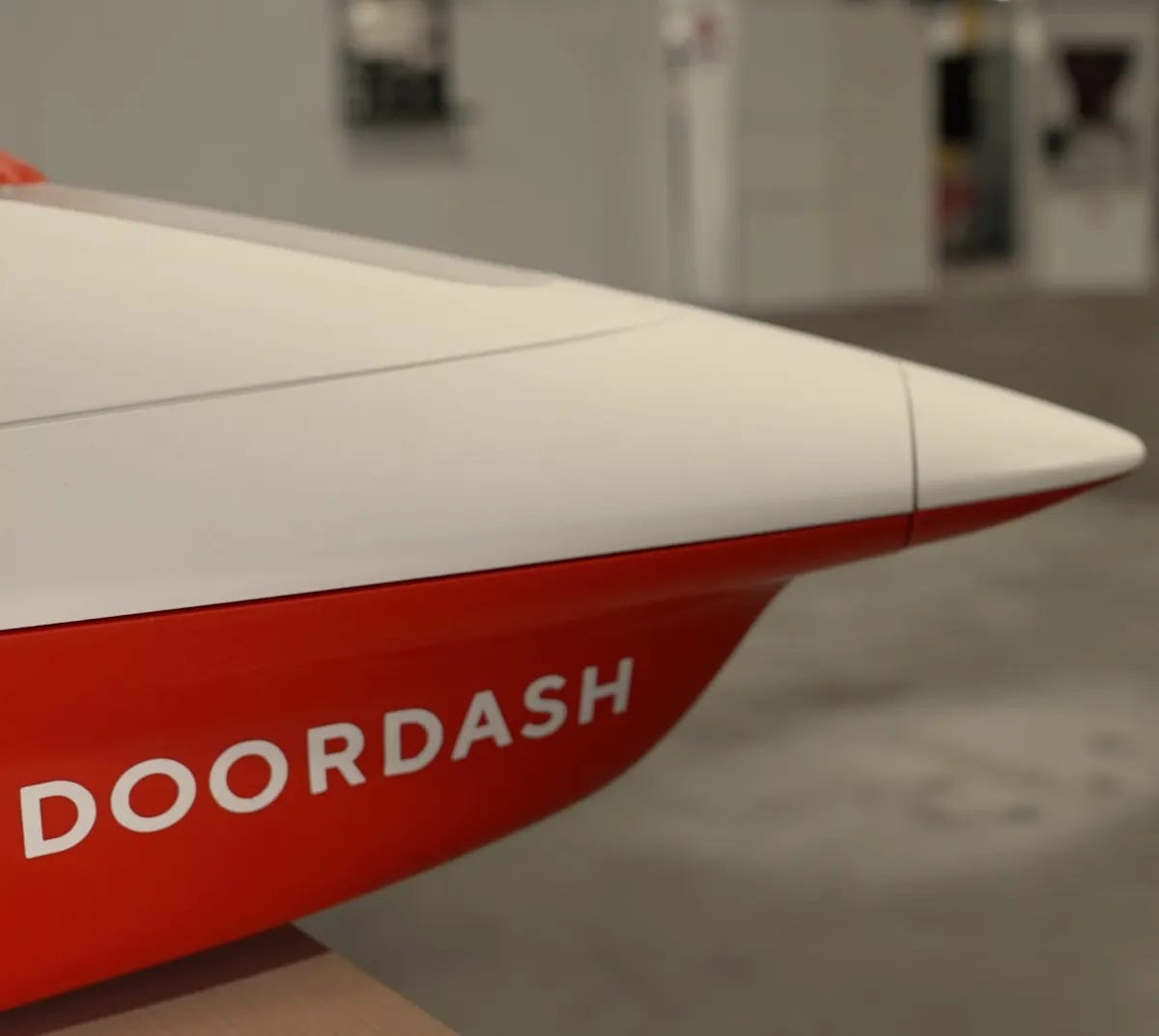
DoorDash secured an FAA Part 135 certificate for DoorDash Air, becoming the eighth operator authorized to run a commercial drone-delivery airline in the U.S. DoorDash says its in-house aircraft was designed and built in America with a majority of U.S.-sourced components — unusually timely details for the spec sheet. Stores participating in one pilot reportedly saw order volume rise about 30% over nine weeks.
MOIA opened its Hamburg robotaxi pilot to passengers, allowing selected residents to book free rides in autonomous Volkswagen ID. Buzz vehicles. The test starts with up to 10 vehicles and safety operators across Winterhude, Barmbek and Wandsbek, with integration into Hamburg’s public-transit app expected to follow.
Aurora deployed its second-generation driverless trucks across 10 Sun Belt routes. The International LT-based hardware is designed for a one-million-mile service life; Aurora reported nearly 440,000 driverless miles through June, while manufacturing partner Roush is targeting an annual production run rate of 1,000 trucks by year-end.
Tesla expanded Robotaxi to Orlando and Tampa, adding two more pins to a service map that already includes the Austin, Dallas, Houston and Miami regions. Scale is another matter: Electrek’s analysis of Tesla’s own chart estimates that the fleet completed roughly 900,000 paid miles in both Q1 and Q2, with monthly mileage dropping after April.
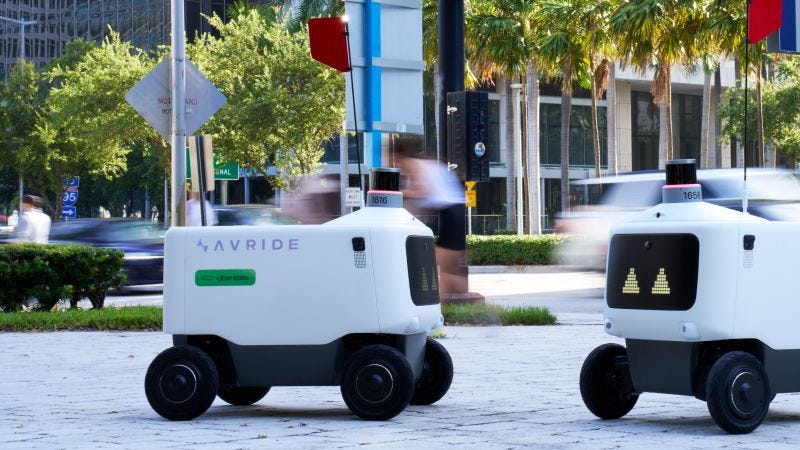
Avride launched delivery robots in Miami with Uber Eats, marking its sixth Uber market and third East Coast location. The company also partnered with Chartwells, bringing Grubhub-booked robot delivery to Bowling Green State University, with more campus rollouts expected this semester.


Humanoids & Physical AI
The FCC added foreign-produced advanced robotic devices and their control components to its Covered List, citing surveillance, supply-chain and remote-commandeering risks. The order blocks new FCC equipment authorizations unless a device receives conditional approval; its broad language could reach quadrupeds, industrial mobile robots and, according to The Verge, certain foreign-made robot vacuums and lawn mowers. The robot trade war may begin in the cleaning aisle.
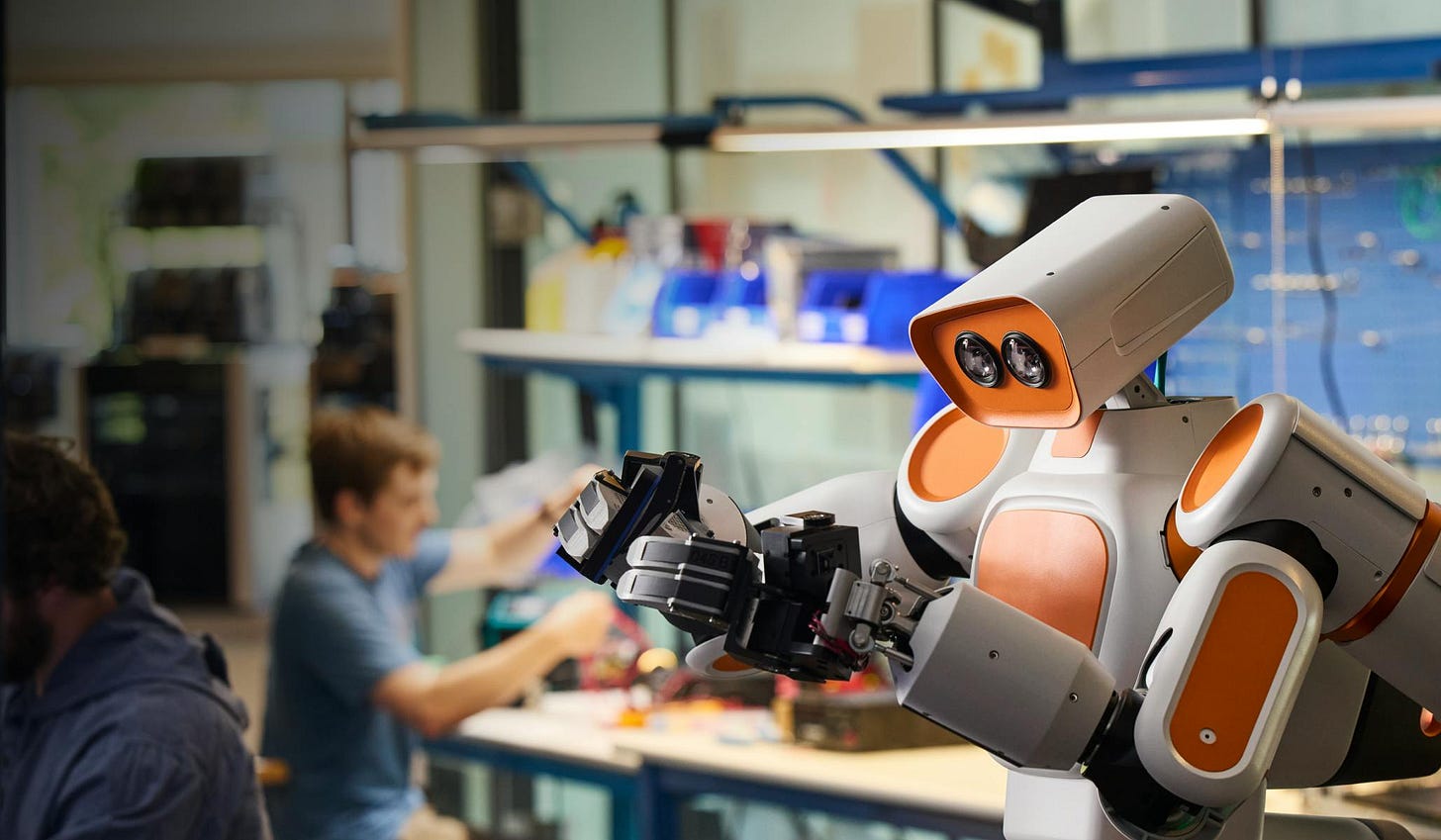
Toyota Research Institute spinout Walden Robotics launched with $300 million at a $1.1 billion valuation. Toyota and Deviation Capital co-led the round, joined by Nvidia, Boeing, Samsung and others; Walden says its general-purpose robots have already progressed from pilot to production work at a North American Toyota plant.
Travis Kalanick’s Atoms raised $1.7 billion in an a16z-led round, furthering the consolidation of CloudKitchens and the former City Storage Systems under a broader industrial-AI umbrella spanning food, mining and transportation. While Atoms acquired Anthony Levandowski’s autonomous trucking and mining company Pronto earlier this year, plans to buy parts of Pony AI seem to be DOA. Ben Horowitz explains the broader thesis in “Travis Is Back.”
UK-based Humanoid raised a $152 million Series A at a $1.35 billion post-money valuation, bringing its total funding to $270 million. The company plans to begin deploying beta robots in Q4, start mass-producing its wheeled platform and expand commercial installations across manufacturing and logistics.
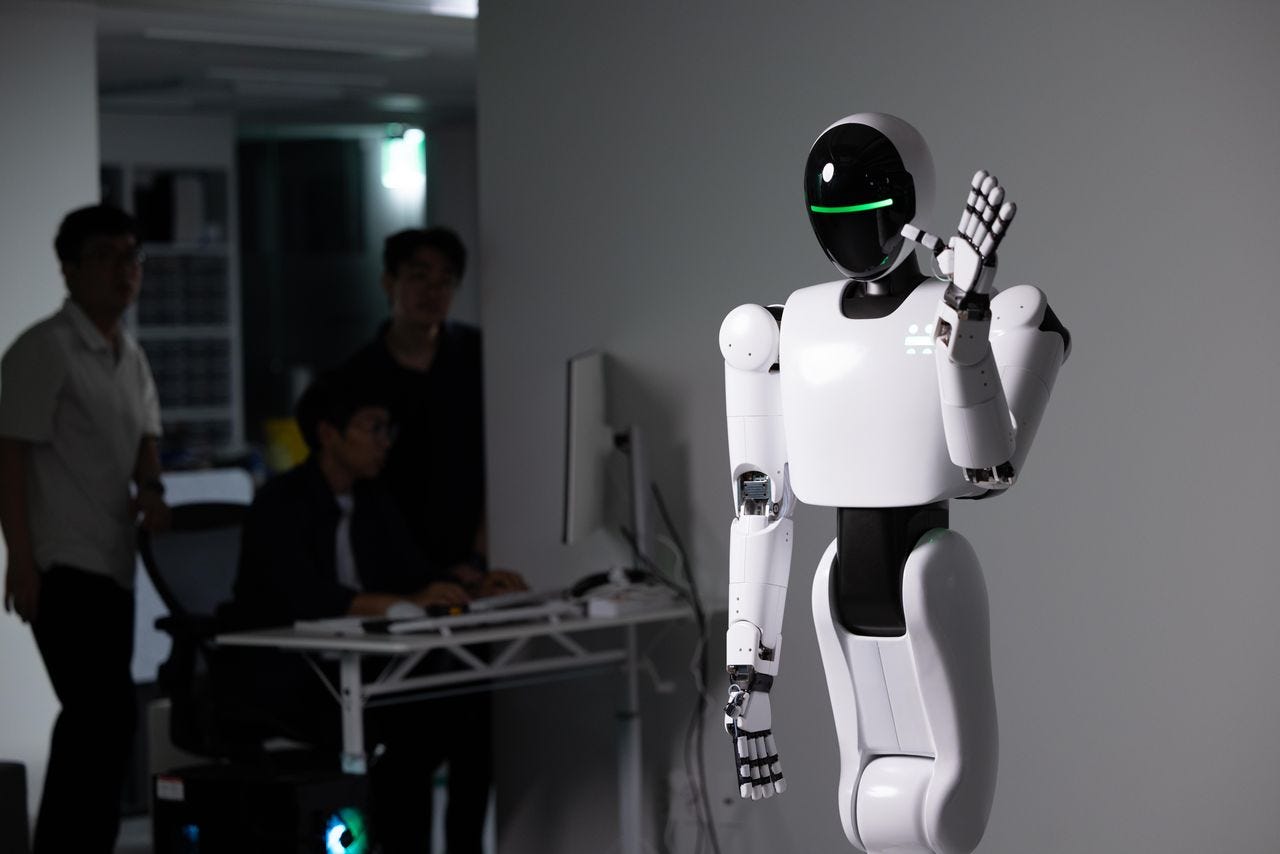
South Korea’s Holiday Robotics raised $105 million for FRIDAY, its wheeled humanoid for repetitive manufacturing tasks. Holiday is building a broader stack spanning simulation, reusable skills and factory operations, with commercial production targeted for the second half of 2026.
Weave Robotics began taking preorders for Isaac 1, a wheeled household robot designed to pick up laundry, make beds and reset cluttered rooms. Isaac costs $7,999 upfront or $449 per month, with initial California shipments expected this fall. It operates autonomously by default, with teleoperation assistance available when the laundry fights back.
World Labs acquired SceniX, combining its spatial-intelligence models with SceniX’s simulation and real-world robotics tools. The companies are promising a tighter loop between generated worlds, simulation and physical deployment, with more product details still to come.


Back of House Automation
Taco Bell is continuing its voice-AI rollout across more than 890 U.S. drive-thrus using technology from Omilia. The system handles ordering while escalating edge cases to employees — an operational deployment, rather than another demo declaring the death of the drive-thru worker.
Kiosks, Retail & Self-Checkout
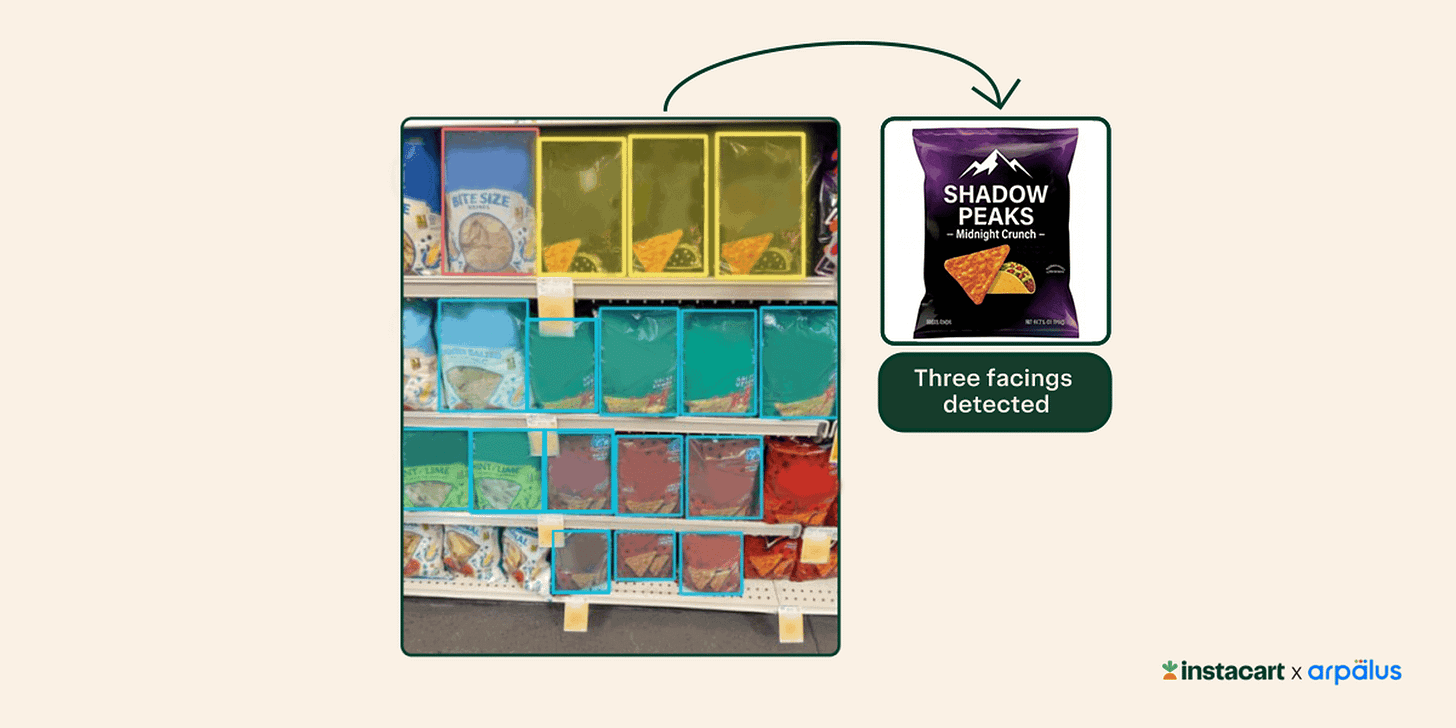
Instacart acquired Arpalus, a computer-vision startup that identifies products, prices and shelf conditions with what it says is greater than 95% average accuracy. Instacart plans to combine the technology with data from 600,000 shoppers, Caper carts and fixed cameras to improve inventory visibility across nearly 100,000 stores.
Schnucks is adding an agentic shopping assistant from VitalityIP to its app and website. The assistant will provide meal ideas, nutrition guidance and personalized recommendations while allowing Schnucks to retain its customer data and relationship; launch is expected in late summer.
Nourish + Bloom opened its fourth autonomous grocery store at Pittsburgh Yards in Southwest Atlanta. The 24/7 location uses app-based entry and camera-powered checkout, received a $600,000 food-access grant and is expected to serve more than 5,000 customers per month. Check out our earlier deep dive on the robotic grocer.
Amazon’s decision to close its remaining Go stores has produced a useful cashierless-retail postmortem. Shoppers like less friction; retailers are less enthusiastic about the sensor density, infrastructure and operational complexity required to remove checkout entirely.


Industry Trends
European robotics startups raised more during the first six months of 2026 than during the previous two years combined, according to Sifted. Walden, Humanoid and Holiday suggest that physical AI’s funding boom is becoming a multinational arms race, rather than merely another Silicon Valley story.
Professor Scott Galloway argues that tech is irrationally obsessed with humanoids, overlooking specialized robots already producing revenue in favor of anthropomorphic machines constrained by power, dexterity, training data and reliability. It’s a useful corrective in a month featuring several nine-figure humanoid rounds: the money is real, but general-purpose capability remains a work in progress.
In Other News
Coco Robotics deployed 25 delivery robots in Washington, D.C., initially serving Logan Circle. Bliq won approval to test autonomous cars in Finland, its second European market after Estonia. Tesla says it is developing a wheelchair-accessible autonomous vehicle, although it provided no timeline, specifications or product name. Mobileye will supply cloud-enhanced ADAS for select Stellantis vehicles expected in 2027. Tau launched an invite-only humanoid cleaning service in San Francisco for $30 per hour; each machine is jointly controlled by AI and a remote human operator. Anthropic has reportedly discussed acquiring Physical Intelligence, although neither company has announced a transaction. Kroger debuts AI shopping assistant for meal planning.